Theme Name: Popularis eCommerce
Publisher: ThemeHunk
Cost: Free version available
Premium version available (with extended features)
Where is it available?
https://wordpress.org/themes/popularis‑ecommerce/
Attributes / Tags
- eCommerce
- WooCommerce support
- Responsive design
- Custom colors
- Featured products slider
- Header options
- Sidebar widgets
- Custom logo
Design & Layout Review
Colors
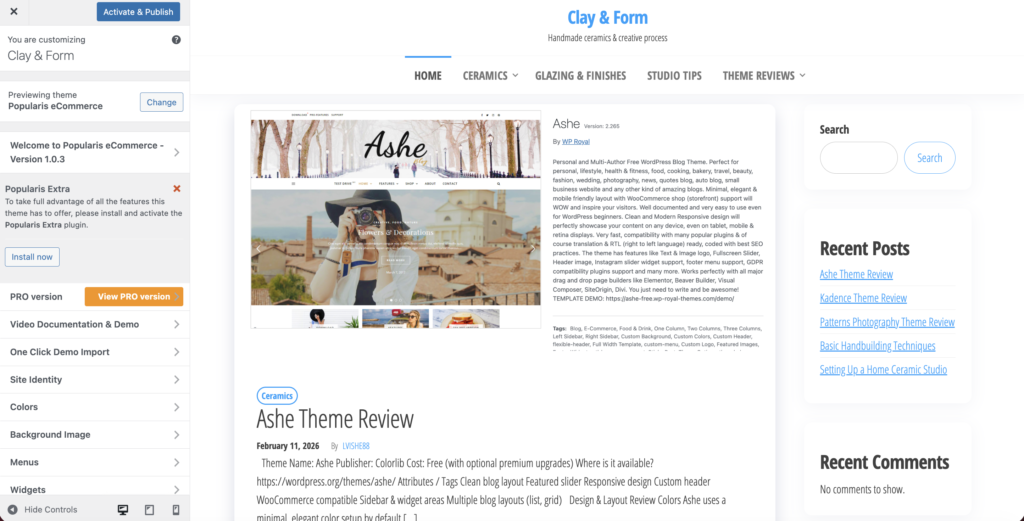
The default color scheme is clean and neutral — white background with dark text and colored accents. It’s designed to highlight products, which makes it ideal for an online ceramics shop. Through the Customizer, you can adjust colors for buttons, links, headers, and backgrounds to match your brand palette.
Page Layout Options
Popularis eCommerce offers:
- Full‑width layout for product pages
- Sidebar on shop pages
- Grid display for products
- Homepage sections with featured products
- Optional sale banner
This gives a professional shop feel without needing extra page builder plugins.
Options & Widgets
The theme supports:
- WooCommerce product widgets
- Custom logo upload
- Footer widget areas
- Social icons
- Slider on homepage
- Product category sections
These widgets help you showcase products and promote sales directly from the homepage.
Main Features
- Fully WooCommerce compatible
- Responsive & mobile‑ready
- Product sliders
- Featured products sections
- Custom header options
- Color & typography controls
- Clean product grid layout
- Footer widgets
Reviews & Stats
- Active Installations: 5,000+
- Star Rating: (4/5)
- Last Updated: Recently maintained
- Compatible with Latest WordPress: Yes
My Rating: (4 / 5)
Why?
I give Popularis eCommerce 4 out of 5 stars because it offers solid support for online stores without requiring paid plugins. The product grid, featured sliders, and WooCommerce widgets are easy to set up and look professional. The customization options allow you to match your brand colors and the layout feels clean and user‑friendly. The reason it’s not 5 stars is that some advanced ecommerce elements (like advanced filters or premium header styles) require paid extensions. Despite that, it’s a great free option for anyone starting an online ceramics shop or small business.